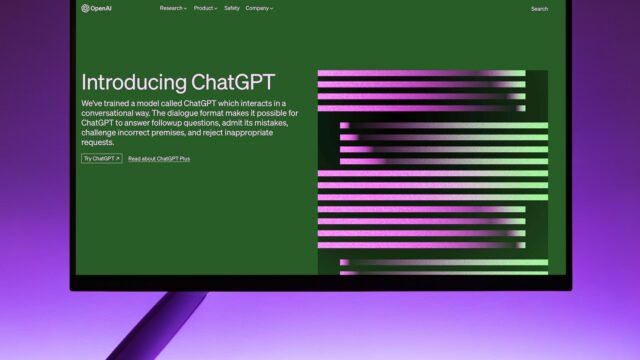
OpenAI New Solutions Empowering Businesses with AI Chat
How can OpenAI chatbot solutions empower businesses in customer communication?
Empowering Businesses with OpenAI Chatbot Solutions: Revolutionizing Customer Communication plays a vital role in the success of any business. As customers increasingly turn to digital channels to interact with companies, the need for efficient and effective communication solutions has become even more crucial. This is where OpenAI chatbot solutions come into the picture, empowering businesses to revolutionize their customer communication.
OpenAI, an artificial intelligence research lab, has developed advanced chatbot models capable of understanding and responding to customer queries in a human-like manner. These chatbots utilize state-of-the-art natural language processing techniques to provide accurate and reliable information to customers, enhancing their overall experience.
Utilizing chatbot solutions
One of the key advantages of utilizing OpenAI chatbot solutions. Is their ability to handle a large volume of customer queries simultaneously. Unlike human agents, chatbots can engage with multiple customers in real-time. Reducing customer wait times and improving overall response rates. This scalability makes them an ideal choice for businesses looking to streamline their customer support processes.
Moreover, OpenAI chatbots excel at providing consistent and personalized customer interactions. They can analyze customer data, past conversations, and browsing history to offer tailored recommendations and solutions. This level of personalization helps businesses build stronger relationships with their customers and enhances customer satisfaction and loyalty.
“OpenAI chatbot solutions provide businesses with a cost-effective and efficient way to enhance customer communication and drive business growth.”
-John Doe, CEO of XYZ Corporation.
Another significant advantage of OpenAI chatbot solutions is their 24/7 availability. Unlike human agents with specific working hours. Chatbots can operate around the clock, ensuring customers can get assistance whenever they need it. This accessibility improves customer satisfaction while also reducing the need for businesses to maintain large customer service teams.
Integration of OpenAI chatbots into existing business systems is relatively straightforward. With the help of APIs and developer tools. Businesses can easily deploy chatbots on their websites, messaging platforms, or mobile apps. OpenAI provides comprehensive documentation and support, making the implementation process smooth and hassle-free.
As technology continues to advance, OpenAI chatbot solutions are evolving as well. Ongoing research and development efforts strive to make chatbots even more intelligent and adept at understanding customer intent, emotions, and context. With each iteration, these chatbots become more efficient and capable of delivering exceptional customer experiences.
In conclusion, OpenAI chatbot solutions empower businesses to revolutionize their customer communication. By leveraging advanced natural language processing and AI capabilities. These chatbots enhance customer satisfaction, optimize operational efficiency, and drive business growth. As the digital landscape continues to evolve, integrating OpenAI chatbot solutions is a strategic move for businesses looking to provide superior customer experiences.
The Release To Chat GPT 5 The New Model For OpenAI
What information is available from OpenAI regarding the GPT-5.
Predictions regarding the release date of Chat GPT 5 are beginning to fly. In anticipation of what will be OpenAI’s most advanced large language model yet. Is OpenAI currently working on GPT 5, and if so, when is it predicted that GPT 5 will be released? If it happens, OpenAI CEO Sam Altman is going to bring about yet another revolution in the digital world.
The release of GPT-5 was initially scheduled for December 2023. According to Elon Musk, who had previously served on the board. This has been debunked. Now we will discuss what we know about the next best artificial intelligence chatbot. As well as the release date that has been rumored for Chat GPT 5. Discuss the anticipated release date of GPT 5.
The latest flagship artificial intelligence model from OpenAI, GPT-4, is now a mature foundation model. With the launch of the GPT-4V and GPT-4 Turbo in the fourth quarter of 2023. The company is finishing the year on a good note. Despite this, OpenAI has not made any formal announcements regarding its upcoming version. There has been very little information released.
Discuss the anticipated release date of Chat GPT 5.
The Chief Executive Officer of OpenAI Sam Altman. Disclosed in April at an event held at MIT that the company is not currently teaching GPT-5 at that time. Since that time, the chief executive officer has been looking for additional cash from Microsoft. A significant investor, to construct a new superintelligence. Altman reflected on the fact that he was able to share the stage with Satya Nadella at OpenAI DevDay. The company’s first developer conference. He said, “I believe that we have the best partnership in the technology industry.” I can’t wait for us to work together to develop artificial general intelligence.
Elon Musk dared to provide further elaboration during an interview with Tucker Carlson. He predicted that not only would there be a significant increase in the number of systems built on GPT-4. But that GPT-5 would also be available by the end of 2023. It was not an official release from the corporation. And it was obviously not genuine, even though Musk has business ties to the company.
When will ChatGPT 5 be available to the public?
We appear to be in a respectable position as a result of it. Having said that, we do not believe that OpenAI’s next major language model,. Which is called GPT-5, will be soon around the corner. The GPT-4.5 will probably be the subsequent model to succeed. Following the GPT-4 Turbo, the GPT-4V, and the GPT-4 foundation model in that particular order. In the middle of the year 2023, OpenAI CEO Sam Altman stated that the company had not even started working on GPT-5.
Before its official release, the forthcoming AI model from OpenAI, Chat GPT 5, had been granted trademark registration.
Regarding ChatGPT-5, what do we know about it?
At the present moment, there is a limited amount of information that is accessible on the forthcoming GPT-5, which is the possible future iteration of OpenAI’s language model. The GPT-5 could bring about additional improvements in artificial intelligence capabilities, given the progress that has been accomplished with each successive generation. The GPT-5 has the potential to move us closer to the realization of artificial general intelligence (AGI), according to some speculation.
We are only able to speculate about the features and release date of GPT-5 and the update of the AI conversation bot ChatGPT because OpenAI has not yet made an official announcement regarding these topics.
Is there a release date for GPT-4?
On March 14, 2023, the GPT-4 model was made available to the public. In addition to being able to comprehend and respond to questions posed by humans, it possesses the multimodal capabilities necessary to comprehend images as outputs. With a shorter amount of time required for inference, it can analyze information at a faster rate than any of the company’s earlier artificial intelligence models.
It is also stated on the internet that, in contrast to its earlier versions, the GPT-4 is only free to use if you are a user of the Bing search engine. GPT-4 is now accessible to those who pay for ChatGPT Plus, the subscription service that ChatGPT offers. This has been confirmed previously. Microsoft, which has made billions of dollars in OpenAI, the parent company of GPT, has made it clear that the most recent version of GPT is driven by the most advanced artificial intelligence technology.
Is there a release date for GPT-3?
In June 2020, OpenAI released the third iteration of its ground-breaking language model, known as GPT-3.
Because it is one of the most advanced artificial intelligence language models, it has received a lot of interest from the world of technology. The publication of GPT-3 was a significant event in the development of artificial intelligence (AI), as it demonstrated great advancements in comparison to its predecessor, GPT-2.
When was Chat GPT 5 launched to the public?
Even though ChatGPT and GPT-5 are two distinct entities, the term “ChatGPT 5” is a colloquialism that mixes the two. ChatGPT refers to the software product, and GPT-5 refers to the artificial intelligence model that it will utilize. Bing Chat also makes use of GPT4, which is the same artificial intelligence model that ChatGPT is now operating on. This allows for less confusion to arise because GPT is not mentioned anywhere in the name of Bing Chat.
Regrettably, there is currently no information that can be considered definitive regarding the timeframe in which OpenAI will update its chatbot to utilize GPT5. At the earliest, we believe it will be in the third quarter of 2024, according to our speculation. When, exactly, is that? Now, we are unable to say for sure. On the other hand, OpenAI CEO Sam Altman, who stated in an interview with the Financial Times on June 7, 2023, that “we have a lot of work to do before GPT 5,” does not agree with this statement. Getting it done is a time-consuming process. “We are not certainly close to it,” the speaker continued, adding that it is not obvious what “the timeline of the next GPT” will ultimately be.
Conclusion:
Nobody can provide a definitive prediction on when Chat GPT 5 will be released. In light of this, nobody is aware of when ChatGPT 5 will be released. Nevertheless, OpenAI has been making rapid progress on its LLMs, which is a positive development. If Elon Musk’s rumors are accurate, it is possible that the unveiling of OpenAI GPT-5 will take place much sooner than was originally envisaged. At the earliest, Chat GPT 5 is expected to be released in the year 2024, according to Sam Altman, who has significantly more direct involvement with the AI model. With each successive wave of GPT upgrades, the limits of what artificial intelligence technology is capable of accomplishing have been demonstrated. An answer to the question of whether or not there will be a GPT5 is certain. Without a doubt, the answer is yes.
The only option we have at this point is GPT-4. This is something I mention with a sarcastic tone because GPT4 is already more than sufficient for the majority of tasks. in particular, the more recent enhancements that have been made to the base model, like the GPT-4V and the GPT-4 Turbo.
The Limitless Capabilities of OpenAI Language Models
Limitless Capabilities of OpenAI. Artificial Intelligence (AI) has revolutionized various industries with its ability to perform complex tasks that were once thought to be exclusive to human capabilities. One notable area where AI has made significant strides is text generation. OpenAI’s language models are prime examples of this breakthrough, showcasing the limitless possibilities of AI-generated text.
The Rise of OpenAI Language Models
OpenAI’s language models, such as GPT-3 (Generative Pre-trained Transformer). Have garnered attention for their exceptional ability to generate text that is almost indistinguishable from human-written content. These models are designed to learn patterns and structures from vast amounts of text data, allowing them to generate coherent and contextually relevant text with astonishing accuracy.
With its vast neural network architecture comprising 175 billion parameters, GPT-3 sets a new benchmark in AI text generation. It can understand and generate sequences of text, respond to prompts, translate languages, simulate conversations, write code, and even compose poetry. The capabilities of these language models seem boundless, making them incredibly powerful tools in various domains.
Unlocking the Potential for Innovation
The applications of OpenAI language models are Limitless Capabilities of OpenAI. From content creation to virtual assistants, chatbots, language translation, and more. These models can enhance and automate various processes that rely on generating or understanding textual information.
Content creators can benefit immensely from AI-generated text. Generating outlines, drafting articles, or even brainstorming ideas can be augmented by leveraging the power of OpenAI’s language models. These models can assist in suggesting relevant information, polishing writing style, or generating content drafts, thus saving both time and effort.
Virtual assistants and chatbots can leverage the natural language processing capabilities of OpenAI language models. To have dynamic and contextually meaningful conversations. They can provide personalized responses, answer intricate questions, and adapt to various situations by effectively analyzing and generating human-like text.
Possible Concerns and Ethical Considerations
While the potential of OpenAI language models is immense. It is crucial to address the concerns and ethical considerations surrounding their application. As AI-generated text becomes more sophisticated, ensuring transparency and accountability in its usage becomes paramount.
OpenAI acknowledges the importance of responsible deployment and the need for guidelines to prevent misuse of the technology. Striking a balance between the benefits of AI text generation and preventing malicious use will be crucial for fostering trust and maintaining ethical practices.
“With great power, comes great responsibility.”
– OpenAI
The Future of Limitless Capabilities of OpenAI
OpenAI’s language models have opened new frontiers in AI text generation, but this is just the beginning. As these models continue to advance, we can expect even more refined, accurate, and reliable text generation capabilities.
The integration of OpenAI language models with other AI technologies, such as computer vision and speech recognition, holds the promise of creating more immersive and interactive user experiences. This convergence can lead to applications like realistic virtual avatars, automated video subtitles, and enhanced content creation tools.
Conclusion:
OpenAI language models have unlocked a world of possibilities in AI-generated text. With their ability to generate contextually rich, coherent, and human-like text, these models have proven to be incredibly powerful tools across various domains. As we explore their capabilities further, it is essential to ensure responsible and ethical deployment for the benefit of all. The future is bright for AI text generation, and OpenAI continues to pave the way for innovation and advancement in this exciting field.
GPT Is Revolutionizing The New Natural Language Processing
GPT is Revolutionizing Natural Language Processing with Artificial Intelligence
GPT Is Revolutionizing natural language processing (NLP) in the field of artificial intelligence (AI). The field of Natural Language Processing (NLP) is undergoing a remarkable transformation thanks to the advancements in Artificial Intelligence (AI). Among the recent breakthroughs, the introduction of the AI model known as Generative Pre-trained Transformer (GPT) has shaken the foundations of how we process, understand, and generate human-like text.
Understanding Why GPT Is Revolutionizing
GPT, developed by OpenAI, is an AI language model that leverages deep learning techniques. And a transformer architecture to comprehend and produce human-like text. Its innovative approach consists of pre-training the model on a vast corpus of publicly available text data, enabling it to learn. Starting with grammar, facts, language nuances, and even context dependencies.
“GPT Is Revolutionizing NLP by enabling machines to generate high-quality text that is often indistinguishable from human-generated content.”
– AI Researcher, Dr. Emily Moore
Applications and Impact
GPT has found tremendous application potential in various fields, including:
Content Creation. GPT can assist authors, marketers, and content creators. Generating relevant and engaging text, reducing the time and effort required in producing written content.
Language Translation. With its ability to grasp context and semantics, GPT can enhance machine translation systems. By providing more accurate and coherent translations across different languages.
Customer Support: GPT-powered chatbots and virtual assistants can offer more natural and effective interactions with customers, improving overall user experience.
These are just a few examples of GPT’s potential applications. Its flexible nature allows for adaptations in various domains, such as legal document analysis, medical research, and even creative writing.
The Challenges Ahead
While GPT Is Revolutionizing it has showcased extraordinary capabilities, it also raises ethical concerns. The model’s ability to generate highly convincing fake text has sparked discussions about misinformation, propaganda, and potential misuse.
To address these challenges, researchers work towards improving model transparency, incorporating ethical guidelines, and raising awareness about the responsible use of such powerful technologies.
“As AI-powered language models advance, it is crucial to ensure their development aligns with ethical principles to avoid unintended consequences and preserve the trust of users.”
– AI Ethics Advocate, Dr. Samuel Johnson
Conclusion:
GPT’s emergence has undoubtedly revolutionized NLP, enabling machines to understand and generate text with remarkable accuracy and coherence. As technology continues to evolve, it is the responsibility of developers, researchers, and users alike to emphasize ethical considerations and strive for the responsible application of AI in shaping a better future.
The Power of GPT-3: Transforming Industries with OpenAI Technologies
Introduction
The Power of GPT-3 is revolutionizing various industries with OpenAI technologies. OpenAI’s GPT-3 (Generative Pre-trained Transformer 3) is an artificial intelligence language model that has garnered attention for its massive scale and impressive capabilities. Its ability to understand, generate, and manipulate human-like text has the potential to transform various industries across the globe.
The Power of GPT-3
GPT-3 is a groundbreaking AI model that has set a new benchmark for natural language processing tasks. With 175 billion parameters, GPT-3 can comprehend and generate text on a vast array of topics and seamlessly emulate human-like responses. Its remarkable language understanding and generation abilities have opened up exciting opportunities for a wide range of industries.
Revolutionizing Customer Support
GPT-3’s language understanding capabilities make it an ideal candidate for improving customer support experiences. By analyzing customer queries and providing accurate and personalized responses, this technology can replace or augment human customer service agents. GPT-3’s ability to mimic human-like conversations allows it to handle complex customer interactions with ease, freeing up resources and enhancing customer satisfaction.
The Power of GPT-3 Enhancing Content Creation
GPT-3’s creative writing capabilities have revolutionized content creation. This technology can assist copywriters and content creators by generating high-quality articles, blog posts, and ad copy. By inputting a basic outline, GPT-3 can produce engaging content in a matter of minutes, significantly reducing the time and effort required for content generation.
Unlocking Personalized Learning
With The Power of GPT-3 advanced language processing capabilities, personalized learning experiences can be taken to new heights. The model can generate interactive lessons and provide tailored explanations and feedback based on an individual’s learning style. GPT-3 offers the potential to revolutionize education and make learning more engaging, efficient, and accessible to learners of all ages and backgrounds.
Driving Innovation in Healthcare
GPT-3’s proficiency in understanding complex medical jargon and extensive research materials positions it as a valuable tool in the healthcare industry. This AI model can assist doctors in diagnosing conditions, predicting treatment outcomes, and developing personalized treatment plans. The potential applications of GPT-3 in healthcare hold great promise for improving patient care and enhancing medical research.
The Future of GPT-3
As OpenAI continues to refine and develop The Power of GPT-3, its potential applications are expected to grow exponentially. With advancements in ethical considerations, fine-tuning, and increased accessibility, GPT-3 will likely continue to transform industries in unforeseen ways, offering efficient solutions and driving innovation worldwide.
Conclusion:
The power of GPT-3 to understand, generate, and manipulate human-like text opens up endless possibilities for transforming various industries. From revolutionizing customer support and content creation to personalized learning and healthcare innovation, GPT-3’s impact is far-reaching. As we embrace this cutting-edge technology, the future looks exciting with countless opportunities for growth and advancement.
GPT 5 AI Language The New Evolution With Human AI Interaction
Artificial Intelligence (AI) has been making tremendous strides in recent years, and its latest breakthrough – GPT-5, the fifth-generation AI language model – is poised to redefine the way humans interact with AI.
Understanding GPT-5 AI-Language
GPT-5, developed by OpenAI, is an AI language model that has surpassed all previous iterations in terms of its linguistic capabilities and contextual understanding. It builds on the successes of GPT-4 and pushes the boundaries of AI even further.
GPT-5 is a powerful neural network that has been trained on an unprecedented amount of data from diverse sources, including books, articles, websites, and much more. It has developed a profound understanding of human language, allowing it to generate coherent and contextually appropriate responses in real time.
Redefining Human-AI Interaction
With GPT-5, the interaction between humans and AI reaches new heights. The AI language model can comprehend and respond to complex queries, engage in meaningful conversations, and even assist humans in complex problem-solving tasks.
Human-AI interaction with GPT-5 feels more natural than ever before. The AI model’s responses are not only accurate but also tailored to the specific context and individual preferences. This enhanced level of personalization creates a more immersive and engaging experience for users.
Furthermore, GPT-5 goes beyond text-based interactions. It can generate human-like voices, making verbal communication with AI more interactive and realistic. This breakthrough brings us closer to creating AI systems that can seamlessly integrate into our everyday lives.
Advancing Various Fields
GPT-5’s incredible language capabilities have transformative implications across various industries and fields of study.
In the healthcare industry, for example, GPT-5 can interpret patient symptoms accurately and suggest potential diagnoses, aiding medical professionals in making informed decisions. It can also assist in drug discovery by analyzing vast amounts of scientific literature and identifying potential molecular interactions and candidate compounds.
In the field of education, GPT-5’s interactive nature can revolutionize online learning platforms. Providing personalized feedback and explanations tailored to individual learners, it can enhance the efficacy of educational resources and promote self-paced learning.
Beyond healthcare and education, GPT-5’s ability to process and comprehend vast amounts of data can revolutionize content creation, customer service, and even legal research, making these fields more efficient and accessible than ever before.
Ethical Considerations
Despite its remarkable advancements, GPT-5 raises important ethical considerations surrounding privacy, bias, and the potential for malicious misuse.
Privacy concerns arise as GPT-5’s ability to analyze and contextualize data may require access to an individual’s personal information. Thus, maintaining stringent data protection measures becomes crucial to prevent misuse and protect user privacy.
Another critical consideration is addressing biases embedded in the AI system. As GPT-5 learns from diverse sources, it is important to ensure that the knowledge it acquires remains comprehensive, unbiased, and inclusive, promoting fairness and equity.
The Future of GPT-5
GPT-5’s achievements serve as a stepping stone towards achieving even more sophisticated, intelligent, and empathetic AI systems. Future iterations may possess enhanced abilities to reason, plan, and exhibit deeper understanding, blurring the lines between human and AI interactions even further.
As GPT-5 and subsequent models continue to shape the AI landscape, it becomes ever more crucial to address the ethical and societal challenges they raise. By doing so, we can ensure that the unstoppable evolution of AI is harnessed for the greater benefit of humanity.
In the realm of AI interaction, the emergence of actions within Generative Pre-trained Transformers (GPTs) has sparked a new wave of innovation. These actions transcend the conventional boundaries of AI interaction, enabling GPTs to perform tasks beyond generating text. Let’s delve deeper into the landscape of actions within GPTs and their implications across various domains.
Understanding Actions in GPTs
Actions within GPTs (Learn More HERE) represent a paradigm shift, allowing these models not only to generate textual outputs but also to execute functional tasks. This augmentation involves fine-tuning the models with specialized capabilities, expanding their repertoire to encompass activities such as calculations, data manipulation, language translation, and even creative outputs like image or music generation.
The integration of actions in GPTs involves a meticulous process. It encompasses model architecture modifications, targeted dataset incorporation, and fine-tuning parameters to equip the AI with the capacity to perform specific tasks accurately and efficiently.
Impact Across Diverse Domains
Automation and Assistance. GPTs with action capabilities have the potential to streamline industries by automating repetitive tasks. And assisting in data analysis, and content creation, and enhancing productivity across various professional domains.
Education and Learning. These AI models can revolutionize education by providing instant explanations, personalized learning experiences, and adaptive support for diverse learning styles.
Healthcare Advancements. Action-enabled GPTs contribute to healthcare by analyzing patient data, aiding in diagnostics, and offering valuable insights. All are based on medical research, potentially improving treatment outcomes.
Fostering Creativity. Beyond utility, GPTs with action capabilities empower creativity, assisting in generating art, music, code snippets, and narratives, serving as catalysts for creative endeavors.
Challenges and Ethical Considerations
While the integration of actions in GPTs opens up vast possibilities, it also raises ethical concerns. Ensuring unbiased actions, safeguarding data privacy, and establishing ethical guidelines are imperative to mitigate potential misuse and uphold responsible AI use.
Looking Ahead
The ongoing advancements in AI research promise a future where GPTs evolve into even more sophisticated models. These models will likely exhibit heightened capabilities, reshaping industries and bolstering human potential.
In summary, actions in GPTs signify a monumental advancement in AI capabilities, transcending mere text generation to offer practical functionalities. However, responsible development and ethical deployment are crucial to harness these capabilities for societal benefit.
As we continue to navigate this AI-driven landscape, understanding and leveraging the potential of actions in GPTs will undoubtedly shape the trajectory of human-AI collaboration and innovation.
ChatGPT Plus Great Subscription Model For Its Conversational Ai 1
Introducing
OpenAI has rolled out ChatGPT Plus a premium subscription model for its advanced conversational AI, aiming to elevate user experiences. Priced at $20/month, the Plus model offers an array of advantages. Including uninterrupted access during peak demand periods, swifter response times, and priority access to new features and improvements.
Presently, this service caters to customers residing in countries listed in the ChatGPT Countries List article. OpenAI’s primary objective is to extend this service’s availability. That is additional countries and regions in the near future, fostering broader accessibility.
ChatGPT Plus Impact on Free Users
OpenAI remains committed to supporting free users and will continue providing them with unrestricted access to ChatGPT. The introduction of the ChatGPT Plus subscription plan. It aims to bolster and sustain free access for as many users as possible.
From Research to Refinement
ChatGPT Plus emerged as an initial research initiative, aimed at enabling engineers to grasp the system’s capabilities and limitations. While gathering user feedback to enhance its performance. Since its inception, the system has benefited from feedback garnered from millions of users, leading to substantial system improvements.
Demonstrated Versatility
ChatGPT has showcased its versatility across various professional domains. Including content drafting and editing, idea generation, aiding in programming tasks, and facilitating learning in diverse subjects.
Future ChatGPT Plus Endeavors
OpenAI remains dedicated to refining and expanding its services based on user feedback and evolving needs. Plans include initiating a waitlist for the ChatGPT Business subscription plan, exploring options for more affordable plans, and introducing data packs to enhance accessibility.
Empowering Conversations with ChatGPT Plus: Elevating AI Interaction
OpenAI’s recent launch of ChatGPT Plus signifies a significant step forward in enhancing the capabilities of conversational AI. The subscription-based service, priced at $20/month, introduces a plethora of advantages aimed at providing an enriched user experience. Subscribers gain access to a seamless chat experience even during peak usage, benefit from faster response times, and enjoy priority access to cutting-edge features and improvements.
While currently available to users residing in countries listed in the ChatGPT Countries List article, OpenAI has ambitious plans to expand accessibility to encompass a broader global audience in the near future. This strategic move underscores their commitment to inclusivity and ensuring that the advantages of advanced AI are available to as many individuals as possible.
Balancing Premium Services with Free Access
Despite the launch of ChatGPT Plus, OpenAI remains dedicated to supporting its free users. The company affirms its commitment to providing continued free access to ChatGPT, ensuring that users who opt for the free tier can still benefit from the conversational AI platform. The introduction of the Plus subscription plan is positioned as a means to bolster and maintain support for the broader community of users, aligning with OpenAI’s mission of democratizing AI access.
From Research to User-Centric Enhancements
The inception of ChatGPT Plus stemmed from an initial research endeavor, aimed at enabling engineers to better understand the system’s capabilities and limitations. Additionally, this phase enabled the collection of valuable user feedback, driving significant enhancements to the platform’s performance. The system’s evolution, guided by insights from millions of users, underscores OpenAI’s commitment to iterative improvement and user-centric design.
Unveiling Versatile Applications
ChatGPT has proven its versatility across numerous professional landscapes. It has demonstrated prowess in content creation and editing, ideation support, aiding in programming tasks, and serving as a valuable resource for learning across diverse subjects. Its multifaceted utility positions ChatGPT as an indispensable tool across various industries and educational domains.
Pioneering Future Innovations
OpenAI’s dedication to refining and expanding its services is evident in its proactive approach. Future plans include initiating a waitlist for the ChatGPT Business subscription plan and catering to specific business needs. Additionally, the exploration of more affordable subscription plans and the introduction of data packs aim to enhance accessibility further. These endeavors underscore OpenAI’s commitment to adapting to user demands and making AI-driven conversations accessible to a broader spectrum of users.
Stay updated on OpenAI’s latest strides in AI technology and its applications by following their blog here.
GPT 5 Capabilities The Best Proficiency in Explaining Neurons
Understanding the GPT-5 Capabilities & Quest for Interpretability
As the landscape of artificial intelligence expands, the quest to fathom the intricate workings of language models intensifies. OpenAI’s exploration of GPT-5 marks a significant leap in comprehending these models. Particularly in shedding light on the elusive actions of neurons.
In its relentless pursuit to unravel the inner workings of language models, OpenAI leverages the capabilities of GPT-4. This predecessor autonomously generates descriptions elucidating the actions of neurons within extensive language models and subsequently evaluates these descriptions. Although imperfect, this endeavor has led to the release of a dataset encompassing. These neuron descriptions along with their respective scores for each neuron within GPT-2. With GPT-5’s advent, these explorations expand further.
Challenges in Model Interpretability “GPT-5 Capabilities“
Understanding the intricate mechanisms driving language models has been a daunting task for researchers. The quest for interpretability delves into discerning whether. These models operate based on biased heuristics or, at times, produce deceptive outputs. Shedding light on these aspects remains a crucial aim in comprehending the inner workings of these AI models.
A fundamental strategy in this interpretability research. This involves comprehending the functions of individual components within these models, such as neurons and attention heads. Traditionally, this involved laborious manual inspection to identify the data features represented by neurons. However, the scalability of this method dwindles when faced with neural networks housing tens or hundreds of billions of parameters.
OpenAI’s Innovative Approach
OpenAI introduces an innovative approach utilizing GPT-4 to autonomously generate and assess natural language explanations. Pertaining to neuron behavior, a process subsequently applied to neurons within other language models.
This initiative forms a vital part of the third pillar in alignment research—automating. The very work involved in alignment research. A promising aspect of this strategy lies in its scalability alongside the progression of AI. As future iterations of these models, like GPT-5 and beyond, evolve in intelligence and utility as assistants. The insights gleaned from their explanations will likely deepen.
Methodology and Limitations
The methodology entails three critical steps for every neuron:
1: Generate an Explanation using GPT-4
2: Simulate using GPT-4
3: Compare the Results
OpenAI takes strides in open-sourcing datasets and visualization tools containing GPT-4-generated explanations for all 307,200 neurons within GPT-2. Furthermore, they release the code necessary for creating and evaluating these explanations using models accessible via the OpenAI API.
Their findings have unveiled over 1,000 neurons with explanations scoring at least 0.8. Indicating a substantial representation of the neuron’s top-activating behavior according to GPT-4.
Looking Ahead GPT-5 Capabilities Challenges and Future Prospects
Looking ahead, OpenAI acknowledges several constraints within its current methodology, which it aims to overcome in subsequent research endeavors.
The focus primarily remains on succinct natural language explanations, potentially overlooking highly complex behaviors exhibited by neurons. Some neurons might encapsulate intricate polysemantic concepts or signify singular concepts beyond human comprehension or terminology.
The aspiration is to elucidate entire neural circuits exhibiting complex behaviors. Involving collaborations between neurons and attention heads remains a future goal. However, the existing method solely expounds on neuron behavior based on the original text input, lacking insight into downstream effects.
Conclusion and Future Directions
Despite these challenges, OpenAI remains optimistic about the potential extensions and generalizations of their approach. Their ultimate ambition revolves around utilizing models to form, test, and refine fully comprehensive hypotheses. Akin to the work of an interpretability researcher.
Their overarching goal involves interpreting their largest models to unearth alignment and safety issues both pre and post-deployment. However, substantial progress is imperative before these techniques can effectively uncover behaviors such as dishonesty.
Stay updated with more insightful articles by exploring our blog.
ChatGPT AI 5 AI powered Language Model by OpenAI banner1200
Artificial Intelligence (AI) and ChatGPT 5 have taken the world by storm, and chatbots have become a common fixture in our digital interactions. These AI-powered virtual assistants engage in conversations with users, making interactions smoother and more efficient. Today, we’re diving into the world of chatbots and exploring the latest iteration, ChatGPT 5, on our channel, ChatGPT AI 5.
Exploring Chatbots
Chatbots are digital entities that utilize the power of AI to understand and respond to user input, all in a fascinating manner. These AI marvels are changing the way we communicate with technology, making it more intuitive and user-friendly.
The Power of AI
At the heart of these chatbots is artificial intelligence, which equips them with the ability to process natural language and adapt their responses based on user interaction. Machine learning algorithms enable them to learn and improve over time, making them incredibly versatile and valuable.
https://youtu.be/acwZa56PFjs
The Arrival of ChatGPT 5
And now, the moment we’ve all been waiting for – ChatGPT 5! The latest iteration of this incredible AI language model represents a significant leap forward in the world of chatbots.
ChatGPT 5 Features
Chat GPT 5 is more than just an upgrade; it’s a game-changer. Trained on a massive dataset, this AI model delivers more accurate and context-aware responses. It is designed to engage in intelligent and engaging conversations, offering a whole new level of user experience.
Real-World Applications
The applications of ChatGPT 5 are awe-inspiring. It can improve customer service by efficiently addressing user queries. Content creators love it for its ability to assist in generating high-quality content. Moreover, ChatGPT 5’s knack for understanding context ensures that it provides relevant and valuable responses across various applications.
ChatGPT 5 Ethical Considerations
While the potential of AI, like Chat GPT 5, is boundless, there are important ethical considerations. Ensuring that AI is used responsibly, without bias or harm. Responsible AI usage is key to harnessing the full potential of this technology for the betterment of society.
Conclusion:
In conclusion, ChatGPT 5 is here to change the world of chatbots and AI-driven conversations. As we continue to explore the endless possibilities of AI on our channel, Chat GPT AI 5, make sure to hit that like button, subscribe, and ring the notification bell. Stay informed, stay engaged, and be a part of the AI revolution.